

More About the Weight Loss Pill
Finding an effective weight loss solution can be challenging. Many seek a method that feels simpler than traditional diet and exercise. As a result, weight loss pills are becoming more popular, and patients see them as an effortless solution.
However, they may not be the most long-lasting choice. Together, we will explore more about the weight loss pill and how it compares to weight loss surgery.
What Are Weight Loss Pills and How Do They Work?
Weight loss medication is prescription-based and designed to help with weight management under a doctor’s supervision. There are several options on the market that can be broken down into these main categories.
Appetite Suppressants
Appetite suppressants, such as phentermine, are among the most established types of weight loss medication for short-term use. They work primarily by influencing the neurotransmitters in the brain to increase levels of norepinephrine. This interaction stimulates a mild response that can significantly decrease the feeling of hunger. Appetite suppressants are often a temporary solution, and the goal is to give the patient a head start, making it easier to stick to a lower-calorie diet without feeling deprived.
GLP-1 Receptor Agonists (RA)
GLP-1 receptor agonists, like Wegovy (also prescribed asOzempic for diabetics) and Zepbound (also prescribed as Mounjaro for diabetics) , have a three-pronged effect on weight. First, they mimic a natural gut hormone – glucagon like peptide – 1 (GLP-1) that slows gastric emptying, so food stays in the stomach longer. There is a prolonged feeling of fullness and satisfaction after meals. Second, they send powerful signals directly to the appetite control center in the brain, inducing satiety, reducing cravings thereby eliminating food noise”. Finally, they help regulate blood sugar and improve the body’s response to insulin.
Fat Absorption Inhibitors
Unlike medications that affect brain chemistry, fat absorption inhibitors work exclusively within the digestive system. The most common example, Orlistat, functions by blocking the action of lipase, an enzyme made by the pancreas that the body uses to break down and absorb fat from food. The unabsorbed fat then passes through the digestive system and is eliminated.
Who Is a Good Candidate for Weight Loss Medication?
Candidates for weight loss pills include those with a body mass index (BMI) of 30 or greater, or a BMI of 27 or greater with at least one weight-related condition, such as type 2 diabetes, high cholesterol or high blood pressure as well as those with sleep apnea and disabling joint disease. Some insurance companies require patients to have previously tried diet and exercise without achieving significant weight loss for a specific period of time, before they will cover weight loss pills.
What Are the Best Weight Loss Pills?
Only a qualified medical professional can answer this question after a thorough evaluation — no single pill is considered the “best” for everyone. The right choice for patients depends on their unique health profile, including their BMI, any related health conditions (like diabetes, elevated lipids or high blood pressure) and their lifestyle. For many individuals with a high BMI, weight loss pills may not be the most effective long-term solution, weight loss surgery or bariatric surgery may be more appropriate.
The Hidden Costs and Limitations of Weight Loss Pills
The biggest limitation of weight loss pills is that the results are often temporary. Once the medication is stopped, it can often lead to a rebound effect, leading to weight regain. These pills are seen as a treatment instead of a cure, managing the symptoms of obesity without addressing underlying metabolic issues. Additionally, they can cause side effects, including nausea, constipation and other digestive issues, when taken regularly.
In the end, pills represent an ongoing, potentially indefinite cost, much like subscription or renting a solution. Surgery is a one-time investment in a patient’s health.
Surgery: The Path to Lasting Weight Loss
Weight loss surgery is more than a last resort — it is an effective and reliable tool for achieving significant, long-term weight loss. Surgery provides a metabolic reset, changing the body’s hunger signals, reducing hormones like ghrelin and improving how the body processes food. It can also contribute to transformative health benefits, such as improving conditions like type 2 diabetes, elevated lipids, high blood pressure and sleep apnea.
A Closer Look at Minimally Invasive Bariatric Options
Technology continues to advance for bariatric surgery, offering several minimally invasive options. These solutions have reduced downtime as compared to open surgical options and support a smoother recovery. Some of the most common options include:
- Vertical sleeve gastrectomy: During this surgery, nearly 90% of the stomach is removed, leaving behind a small sleeve. The stomach tissue removed produces most of the body’s ghrelin, the hunger hormone. The new, smaller stomach pouch holds significantly less food, meaning patients feel full much faster and with smaller portions, instead of temporarily masking hunger with medication.
- Gastric bypass: This two-step surgery creates a small stomach pouch and connects it directly to a lower section of the small intestine. Because food bypasses the majority of the stomach and the first part of the small intestine, the patient’s body absorbs fewer calories from the food consumed. The gastric bypass provides a powerful metabolic reset that pills can only imitate temporarily.
Duodenal switch (DS): Duodenal switch (DS): The duodenal switch (DS) combines two surgical techniques. First, a large portion of the stomach is removed to create a sleeve, similar to a sleeve gastrectomy. The procedure also reroutes food so that it enters the lower portion of the small intestine earlier in the digestive process, bypassing much of the upper small intestine. This combination provides several metabolic and appetite-related effects.
The smaller stomach promotes fullness with smaller amounts of food, while removal of the portion of the stomach that produces much of the hunger hormone ghrelin can contribute to significant appetite suppression. Earlier delivery of nutrients to the lower small intestine also enhances gut-hormone signaling associated with satiety. In addition, the intestinal bypass reduces the amount of calories and nutrients absorbed.
By producing both restrictive and metabolic effects, the duodenal switch is one of the most powerful surgical treatments for severe obesity and obesity-related metabolic disease. It can result in substantial and sustained weight loss, with studies reporting average total body weight loss in the range of approximately 45% (approximately 2-3 times what one can expect to get from medications). The surgery can also produce significant improvements in blood sugar control and high rates of type 2 diabetes remission.
Weight Loss Pills vs. Surgery
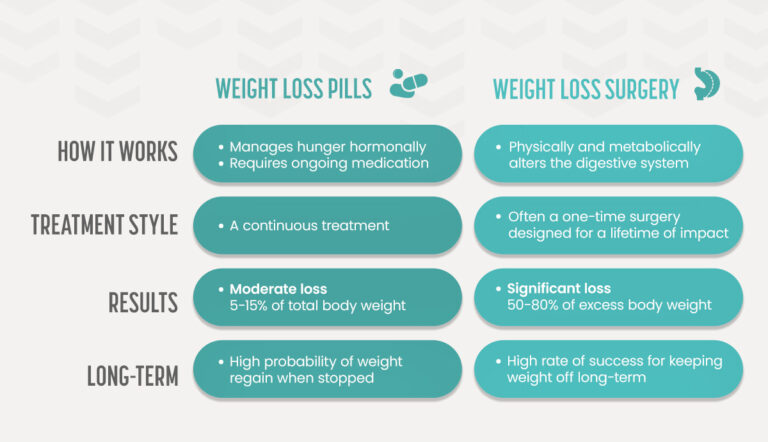
Here is a comprehensive look at comparing weight loss pills to surgical options:
Weight Loss Pills | Weight Loss Surgery | |
How it works | ●Manages hunger hormonally ●Requires ongoing medication | Physically and metabolically alters the digestive system |
Treatment style | A continuous treatment | Often a one-time surgery designed for a lifetime of impact |
Results | Moderate loss (5%-15% of total body weight) | Significant loss (30-50%% of total body weight) |
Long-term | High probability of weight regain when stopped | High rate of success for keeping weight off long-term |
Making Long-Term Health a Priority
Choosing a surgical team is an important decision, and patients deserve one they trust. The Center for Weight Loss Surgery offers guidance, expertise and support that offers long-term patient success:
- A team of dedicated experts: When choosing the Center for Weight Loss Surgery, patients gain a full, multidisciplinary teamwho work together to create a personalized plan.
- World-class surgical experience: Dr. Myur Srikanth has over 25 years of experience in bariatric surgery, including advanced surgeries such as robot-assisted duodenal switch.
- Comprehensive post-op program: We offer long-term support following surgery, continuing to guide and encourage patients in their weight loss journey. Our one-on-one nutritional counseling and long-term follow-up appointments provide ongoing support to help them reach major milestones along the way.
- Advanced, patient-first technology: We use minimally invasive and robot-assisted surgical techniques for surgery and multimodal techniques to manage their recovery. This approach leads to greater precision, smaller incisions, less pain and a faster recovery enabling most patients to be discharged within 4-6h of the surgery
- Guidance through every step: Our dedicated team is here to help patients navigate the process, including working with their insurance provider and exploring affordable financing options and discounted self-pay packages.
Your Journey to a Healthier You Starts Here
While pills may seem like an easy answer, they are often a temporary fix. Lasting change comes from addressing the root problem with a solution built for the long term. Book a no-obligation consultation with the Center for Weight Loss Surgery to learn more about your options.